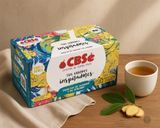
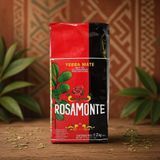
What is Yerba Mate?
Yerba Mate is a traditional South American drink made from the dried and crushed leaves and young shoots of the Paraguayan holly (Ilex paraguariensis). This evergreen plant grows naturally in South America, and the culture of drinking mate is especially widespread in Argentina, Paraguay, Uruguay and Brazil.
Despite the familiar name "mate tea", from a botanical point of view mate is not a tea in the same sense as black or green tea. These teas are usually obtained from different types of leaves of tea plants.
To make yerba mate, the leaves and young twigs are collected, dried and crushed. Depending on the manufacturer, country of origin and processing method, the finished mixture may contain different amounts of leaves, fine fraction and stems. This largely determines the taste of the drink.
Classic mate has a characteristic grassy, tart and bitter taste. In some varieties it is quite mild, in others it is rich, smoky or distinctly bitter. In addition to traditional yerba, today popular mixtures with mint, lemon, herbs, fruits, guarana and other components.
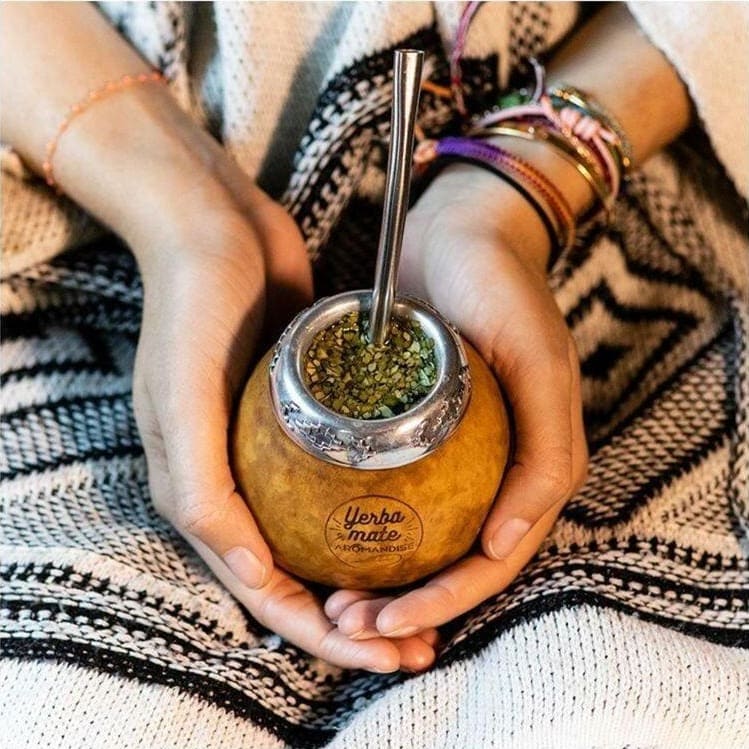
But the peculiarity of Yerba Mate is not only in its taste. It is a whole culture and ritual of drinking the drink. Traditionally, mate is poured into a special vessel - calabas, poured with hot water and drunk through a bombilla - a tube with a filter. One portion of yerba can be poured with water many times, gradually receiving new portions of the drink.
Composition of mate tea
The chemical composition of Yerba Mate is quite diverse. The leaves of the Paraguayan holly contain natural biologically active substances, among which caffeine (matein), polyphenolic compounds and saponins attract special attention.
It is the composition of mate that largely explains its characteristic taste and stimulating properties.
✅ Matein in Mate
Matein stimulates the central nervous system, helps reduce fatigue and increase attention. It is because of its presence that many people choose mate as an alternative to coffee.
✅ Polyphenols
Yerba Mate is a source of various polyphenolic compounds, in particular chlorogenic acid derivatives. These are natural plant components that are studied primarily for their antioxidant activity.
Antioxidants help protect cells from oxidative stress associated with the action of free radicals.
✅ Saponins
Yerba Mate leaves also contain saponins - plant compounds that affect, in particular, the characteristic taste of yerba.
✅ Theobromine and other methylxanthines
Yerba Mate contains other representatives of the methylxanthine group, in particular theobromine. This substance is also found in cocoa.
The composition of mate is a complex of natural plant substances, and their concentration can vary significantly depending on the origin, variety and method of preparation of yerba.
Mate tea - benefits and properties
✅ Vigor and reduction of fatigue
Mate (matein) stimulates the central nervous system and can temporarily increase alertness and reduce fatigue. Its effect usually lasts longer than after drinking coffee.
Therefore, mate is often drunk in the morning, during work or study. For people who want to diversify their usual coffee, Yerba Mate can be an interesting alternative caffeinated drink.
✅ Concentration and mental activity
Caffeine can also have a positive effect on attention and alertness. That is why a cup of mate can be appropriate during work, study or other activities that require concentration.
✅ Antioxidant properties
Yerba mate contains polyphenolic compounds, among which chlorogenic acid derivatives occupy an important place. They exhibit antioxidant activity and help counteract oxidative processes.
✅ Mate and physical activity
Due to its mateine (caffeine) content, mate is also interesting for those who lead an active lifestyle.
✅ Mate and body weight control
On the Internet, you can find claims that mate tea helps to lose weight. Some studies do indeed study the possible effects of Yerba Mate components on energy metabolism, fat oxidation, appetite and body weight.
However, calling mate a “fat burner” or a means for losing weight is wrong. The drink itself is not a substitute for a balanced diet, physical activity and general control of calorie intake.
How does mate tea affect blood pressure?
The question "Does mate raise or lower blood pressure?" does not have the same answer for everyone. Mate contains a natural, milder form of caffeine (mateine), and the body's reaction to caffeinated beverages depends on individual sensitivity, the amount of drink consumed, and the habit of regularly consuming caffeine.
How is mate different from green and black tea?
Mate is significantly different from green and black tea. The main difference lies in the plant from which the drink is made.
Green and black tea are obtained from the leaves of the same plant - Camellia sinensis. The difference between them is largely determined by the way the leaves are processed after harvesting.
Yerba Mate is made from a completely different plant - the Paraguayan holly (Ilex paraguariensis), which originates from South America.
The taste is also different. Green tea can have grassy, fresh and slightly tart shades, black - a more saturated and tart profile. Classic mate usually has a characteristic grassy, earthy and bitter taste, the intensity of which depends on the specific variety and brewing method.
Another important difference is the method of preparation. Green or black tea is usually infused in a cup or teapot, after which the leaves are removed. Traditional mate is poured into a calabash, a bombilla is installed and hot water is gradually added. The same batch of yerba mate can be infused many times as long as it retains its flavor.
Try real mate tea
If you're looking to get to know Yerba Mate culture or find a new favorite, check out Healing Traditions range of mate teas. The catalog features classic and flavored mates from South America, from traditional yerba mate to blends with mint, lemon, guarana, and more.