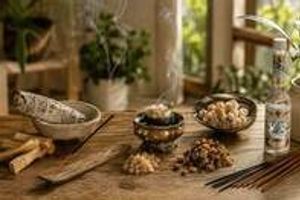
Myrrh resin and copal are tree resins, Palo Santo is an aromatic wood, and *bakhoor* is a prepared blend of a wood base with perfume oils and other aromatic ingredients. All four are used to scent a space, yet they differ in both their fragrance profiles and their methods of use. Let’s explore which one to choose for your home and how to use each type of incense.
It is important to note that fragrance is a subjective experience; two varieties of copal or two *bakhoor* blends can differ significantly from one another.
What is myrrh resin?
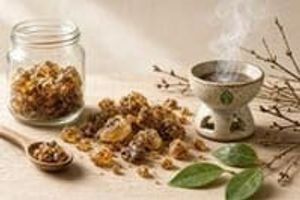
Myrrh is an aromatic resin obtained from trees of the *Commiphora* genus. It appears as small, irregular pieces ranging in color from amber to brown. When heated, myrrh releases a rich, resinous aroma with warm, astringent, and slightly bitter undertones.
Myrrh is an excellent choice for those who appreciate deep, calming scents and wish to experience incense in its traditional form. To use it, place a few small pieces on a special charcoal disc or in a resin-compatible burner. It is best to increase the quantity gradually, as the scent of myrrh can be quite potent.
What is copal resin?
Copal is a general term for aromatic resins derived from various tree species. Therefore, when purchasing, it is worth checking the specific type of copal listed in the product description; white, golden, and other varieties can differ in both scent and appearance.
Compared to myrrh, copal is often perceived as fresher and lighter. Depending on the variety, the fragrance may feature coniferous, herbal, or citrus notes. Copal resin comes in the form of resin chunks and, like myrrh, requires heating in a suitable burner.
What is Bakhoor?
Bakhoor is a traditional Middle Eastern incense. It typically consists of wood chips or a pressed mixture infused with aromatic oils. Its composition may also include resins, spices, and floral elements. Some varieties contain oud, though the word "bakhoor" itself does not imply the presence of oud.
A key feature of Bakhoor is the variety of available fragrance blends. One type might smell of rose and musk, while another features notes of wood, amber, and spices. Bakhoor is heated in a special burner—either over charcoal or in an electric device designed for this type of incense. It is the ideal choice when you want a distinct, perfume-like fragrance for a room.
What is Palo Santo?
Palo Santo refers to aromatic wood—specifically sticks or blocks from the *Bursera graveolens* tree. Of the four types described here, this is the easiest to start with, as it does not require a dedicated burner. You simply light the tip of the stick for a few seconds, extinguish the flame, and let the wood smolder. The stick is then placed on a heat-resistant stand.
The scent of Palo Santo is typically soft, woody, and slightly sweet, though it can vary from batch to batch. Unlike resin, a single stick can be used multiple times; once extinguished, it can be relit later.
Which incense should you choose?
- Do you enjoy rich, tart, resinous scents? Start with myrrh resin.
- Are you looking for a fresher resin scent? Try copal resin.
- Do you love rich, oriental fragrance blends? Choose bakhoor.
- Want to try wood-based incense without a special burner? Pick up some Palo Santo sticks.
Frequently Asked Questions
Are myrrh and copal the same thing?
No. Both are tree resins, but they come from different plants and have distinct scents. Myrrh typically has a more tart, deep aroma, while copal is often perceived as fresher. The specific scent depends on the variety.
Are bakhoor and oud the same thing?
No. Oud is the aromatic wood of the agarwood tree, whereas bakhoor is a prepared incense blend. Oud can be an ingredient in bakhoor, but it is not a mandatory one.
Can copal and myrrh be burned like Palo Santo sticks?
No. Pieces of resin are placed on the hot surface of a suitable burner or on a charcoal disc. A Palo Santo stick, on the other hand, is lit at one end, after which the open flame is extinguished.