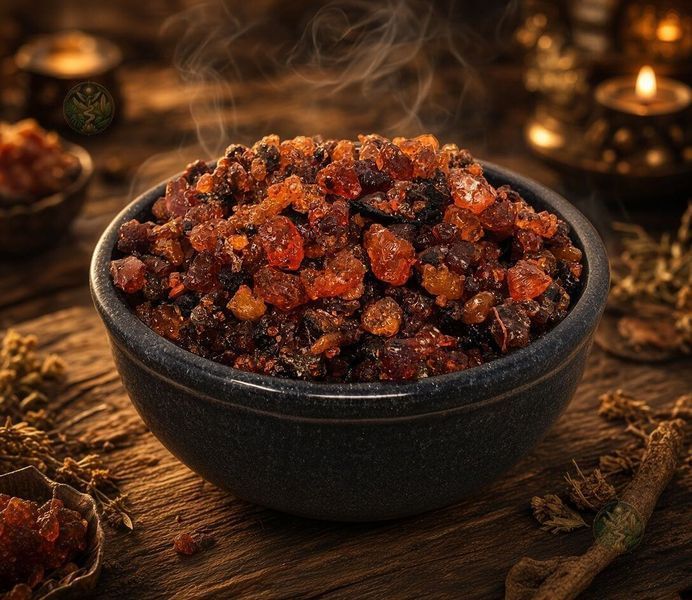
Myrrh Resin is a natural aromatic resin from trees of the genus Commiphora
Myrrh has been known to mankind for thousands of years. Myrrh was used as an incense, aromatic resin, component of perfumery and in religious and ceremonial practices of Ancient Egypt, Greece, Rome and the Middle East.
When heated, Myrrh Resin produces a rich aromatic smoke with a characteristic bitter-resinous, woody, balsamic and warm aroma. This is a classic type of natural incense for those who appreciate deep, natural and not too sweet aromas.
What is Myrrh Resin?
Myrrh is a natural resin obtained from trees and shrubs of the genus Commiphora.
The resin is formed on the bark of the plant, after which it hardens into small pieces or "tears". It is this solid aromatic resin that is used to produce myrrh incense.
The name Myrrh comes from an ancient Semitic root related to the meaning "bitter", which well characterizes the characteristic aroma and taste of the plant.
The aroma of myrrh resin
🌿 Resinous, woody, slightly spicy, sweet, smoky and rich, with a warm balsamic undertone.
When heated, the aroma becomes deeper and richer, releasing a thick, aromatic smoke that fills the room with a deep, resinous scent. Myrrh has a darker and earthier character compared to many light floral incenses.
Production: India
What is Myrrh resin used for?
The main purpose of Myrrh Resin is to be used as a natural incense.
It is also used before meditation, yoga, and breathing practices.
Myrrh resin is traditionally used as an aromatic incense in ceremonies and spiritual practices, for cleansing, and for scenting a room.
If you like Palo Santo, but if you want a deeper, resinous, and "ceremonial" aroma, myrrh can be an interesting alternative.
Myrrh and Frankincense—What's the Difference?
Frankincense and Myrrh are two different aromatic resins, although historically they were often used together.
- Frankincense usually has a lighter, fresher, citrus-woody, and balsamic scent.
- Myrrh is darker, deeper, warmer, more earthy, and bitter-resinous.
Frankincense and myrrh often complement each other beautifully.
Myrrh can also be combined with Palo Santo sticks, copal, sandalwood, cinnamon or other natural resins and incense.
How to use myrrh resin correctly and safely? - Read more in the Blog article.